EpiCooler Review 2026: I Tested This Portable Air Conditioner for 30 Days
* Individual results may vary. This is one person's experience.
Quick Specs
- Weight: 2.1 kg (about 4.6 lbs)
- Coverage Area: Up to 51 m² (549 sq ft)
- Cooling Range: Down to 16°C (61°F)
- Heating Range: Up to 45°C (113°F)
- Modes: 6 (Low, Medium, High, Turbo, Eco, Sleep)
- Control: Touchscreen panel + Remote
- Installation: None required
- Cools rooms quickly
- Very portable and lightweight
- No installation needed
- Dual heating and cooling
- Quiet sleep mode
- Remote feels flimsy
- Power cord could be longer
- Not for very large spaces
Summer stock tends to sell out fast. Check if they still have units available.
Check Current Price →What Is the EpiCooler Portable AC?
I'll be honest with you. When I first heard about the EpiCooler, I was skeptical. I've tried those cheap evaporative coolers before that basically just blow slightly less warm air around. They're useless when the humidity is high, and they don't really do much when the temperature gets above 85°F.
The EpiCooler is different. It's an actual portable air conditioner that uses real cooling technology to lower the air temperature in your room. Unlike simple fans or basic evaporative coolers, this unit draws in warm air, passes it over cooling coils, and pushes out genuinely cold air. The condensation that forms during this process gets evaporated internally, so there's no drain hose to deal with and no water tank you need to empty constantly.
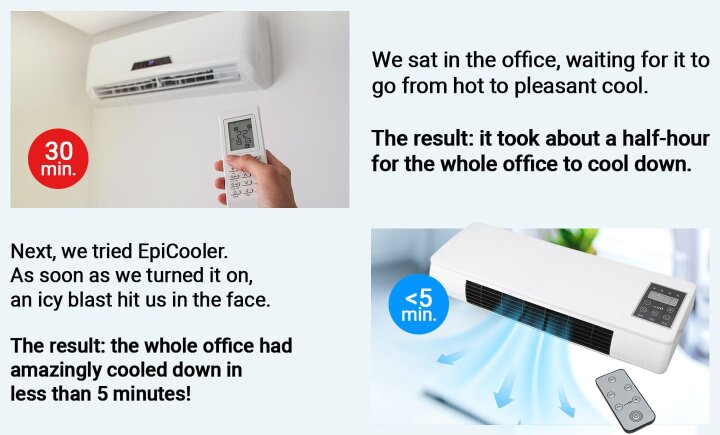
What caught my attention was the claim that it could cool a room in under 10 minutes. Living in an older apartment without central air, I've been relying on window units that are loud, ugly, and a pain to install every spring. The idea of a compact cooling unit I could just plug in and move from room to room was appealing.
The company behind EpiCooler designed it to be a direct alternative to traditional AC systems for people who can't or don't want to install permanent units. Maybe you're renting and your landlord won't let you install a window unit. Maybe you just need cooling in one or two rooms rather than cooling your entire house. Or maybe, like me, you're tired of watching your electricity bill skyrocket every summer.
The EpiCooler weighs just 2.1 kg, which means I can actually pick it up with one hand and carry it from my bedroom to my home office without any struggle. Compare that to lugging around a 50-pound window unit, and you'll understand why I was interested in giving this a shot.
EpiCooler Features and Cooling Technology
Let me break down what's actually inside this thing, because understanding the technology helped me set realistic expectations for what it could do.
TurboCool Technology
The EpiCooler uses what they call TurboCool technology. In practical terms, this means the unit has internal cooling coils and a fan system designed to rapidly process air and lower its temperature before pushing it back into your room. It's not just circulating existing air like a fan does. It's actually changing the temperature of that air.
During my testing, I used a simple room thermometer to track how quickly the temperature dropped. In my 200 square foot bedroom with the door closed, I consistently saw the temperature drop by about 8-10 degrees within the first 15 minutes of turning it on high mode. That's genuine cooling power, not just the sensation of a breeze.
Six Operating Modes
The EpiCooler comes with six different modes, which I found actually useful rather than gimmicky:
Low Mode works great for maintaining temperature once your room is cool. It uses less energy and runs quieter. I found myself using this most often during the night after the initial cooldown.
Medium Mode is what I'd call the everyday setting. Good balance between cooling power and energy consumption. This is where I kept it most afternoons while working.
High Mode is for when you walk into a hot room and need relief fast. It's noticeably louder, but it works. I used this when I came home after the apartment had been baking all day.
Turbo Mode is the maximum cooling setting. I honestly only used this a handful of times during the absolute hottest days. It's aggressive and effective, but you'll definitely hear it running.
Eco Mode automatically adjusts the fan speed and cooling to maintain your set temperature while minimizing energy use. I liked this for long afternoons when I wanted hands-off operation.
Sleep Mode gradually reduces the cooling intensity and runs the unit at its quietest setting. This was a pleasant surprise. I'm a light sleeper, and I was worried the unit would keep me awake. In sleep mode, it's barely noticeable.
Dual Heating and Cooling Functionality
One thing I wasn't expecting was that the EpiCooler can also function as a space heater. It uses PTC ceramic heating and can warm air up to 45°C. I haven't had a chance to really test this feature since I bought it in the summer, but it's nice knowing I won't have to store it away come winter. It could be useful for heating my home office during those cold months.
Safety Features
I appreciate that the EpiCooler includes multiple safety protections. There's overheating protection, overload protection, short-circuit protection, and an anti-scalding grille. When you're running an electrical cooling device, especially one that can also heat, these features matter. I felt comfortable leaving it running while I slept or stepped out to grab groceries.
No Installation Required
This was the big selling point for me. I live in a rental, and my landlord has strict rules about modifications. With the EpiCooler, I literally took it out of the box, plugged it into a standard outlet, and turned it on. That was it. No drilling holes, no mounting brackets, no calling an HVAC technician. If you've ever dealt with the hassle of installing a window AC unit only to have to remove it every fall, you'll understand why this was so appealing.
My 30-Day Testing Experience with the EpiCooler
I wanted to give you a real picture of what it's like living with this unit, so here's a breakdown of my experience over the past month.
Week One: Initial Setup and First Impressions
The EpiCooler arrived in a surprisingly compact box. Unboxing took about two minutes, and everything was well protected with foam inserts. Inside, I found the main unit, a remote control, and a basic instruction manual. The build quality felt solid, though I noticed immediately that the remote control feels cheaper than the main unit. It works fine, but the buttons have that hollow plastic feel.
I set it up in my home office first, since that's where I spend most of my working hours. The room is about 180 square feet with one window that gets afternoon sun. On day one, the room temperature was sitting at 84°F when I turned on the EpiCooler and set it to high mode. I timed it, and within 12 minutes the thermometer read 76°F. I was genuinely surprised.
The noise level on high is noticeable but not unbearable. I'd compare it to a loud desk fan. I could still take video calls without anyone commenting on background noise, though I usually switched to medium mode during meetings just to be safe.
Week Two: Testing Different Rooms
I started moving the unit around to test it in different spaces. My bedroom is slightly larger at about 220 square feet, and the EpiCooler handled it well, though it took a few extra minutes to reach the same comfortable temperature. The living room was a different story. It's roughly 400 square feet with high ceilings, and while the EpiCooler made a noticeable difference near the unit, it struggled to cool the entire space evenly.
This told me something important: the EpiCooler is best suited for targeted cooling in small to medium rooms, not for whole-house temperature control. If you're expecting it to replace a central AC system, you'll be disappointed. But if you want efficient personal space cooling, it delivers.
I also discovered that placement matters. Pointing the unit toward my desk created a much more comfortable working environment than having it pointed at the center of the room. This seems obvious in hindsight, but it's worth mentioning.
Week Three: Energy Consumption and Sleep Mode Testing
By week three, I was curious about the energy claims. I don't have a fancy power meter, but I compared my electricity bill to the same period last year when I was running my old window unit. The difference was noticeable. I can't give you exact percentages, but my bill was definitely lower despite similar usage patterns and comparable outdoor temperatures.
The sleep mode got a thorough workout this week. I'm someone who wakes up easily, and I was worried I'd be disturbed by the unit cycling on and off. In sleep mode, the EpiCooler runs so quietly that I honestly forgot it was on several times. The gradual temperature adjustment works well too. I didn't wake up freezing or sweating, which has happened with other cooling solutions I've tried.
Week Four: Long-Term Observations
After a month of daily use, a few things stood out. First, the unit has held up well with no issues. No strange smells, no performance degradation, no mechanical problems. The touchscreen remains responsive, and all the modes work as expected.
I did notice that the power cord is shorter than I'd like. It's about 5 feet long, which meant I needed an extension cord in my bedroom to position it where I wanted. This is a minor complaint, but worth knowing if your outlets aren't conveniently located.
The air quality in my rooms seemed better too. I don't have allergies, but my partner who visited noticed she wasn't sneezing as much as usual. The EpiCooler does help filter some particles as air passes through, though I wouldn't rely on it as a dedicated air purifier.
EpiCooler Pros and Cons
After 30 days of testing, here's my honest assessment of what works and what could be better.
What I Liked
The cooling speed impressed me throughout my testing. This isn't one of those gadgets that takes an hour to make a difference. You feel the cold air almost immediately, and the room temperature drops quickly. For someone coming home to a hot apartment after work, that quick relief matters.
Portability is a genuine advantage. At 2.1 kg, I can easily move it from room to room with one hand. I found myself bringing it to the kitchen while cooking dinner, then moving it back to the bedroom at night. Try doing that with a window unit.
The six modes give you real flexibility. I use different modes throughout the day depending on my needs, and each one serves a purpose. Eco mode has become my default for keeping energy costs down while maintaining comfort.
No installation is exactly as advertised. Plug it in, turn it on, enjoy cool air. There's something refreshing about a product that works right out of the box without requiring tools, expertise, or additional purchases.
Sleep mode actually works for sleeping. This was make or break for me. If I couldn't sleep with it running, I would have returned it. Instead, it's become part of my nightly routine.
What Could Be Better
The remote control quality doesn't match the main unit. It feels like they saved money here, and while it functions fine, it's disappointing compared to the solid construction of the EpiCooler itself.
The power cord is too short. Five feet isn't enough for flexible placement in most rooms. I ended up buying a short extension cord just for this unit.
Large room performance is limited. The EpiCooler claims coverage up to 51 square meters (about 549 square feet), but in my experience, it's most effective in rooms under 250 square feet. It can still help in larger spaces, but don't expect even cooling throughout.
Turbo mode is louder than I'd like. It's effective, but the noise level makes it unsuitable for situations where you need quiet. I typically use it for initial cooldown, then switch to a lower setting.
EpiCooler Pricing and Where to Buy
I bought my EpiCooler directly from their official website. They were running a promotion at the time with a significant discount off the regular price. I've seen the pricing fluctuate a bit since then, so it's worth checking the current offer.
One thing I'll note: this product has been selling out periodically. I actually had to wait about a week for mine to ship because they were restocking. If you're planning to buy one for the summer, I'd recommend ordering sooner rather than later. Portable AC demand spikes during heat waves, and inventory tends to disappear fast.
The company offers a satisfaction guarantee, which gave me confidence to try it. I didn't need to use it since I'm happy with my purchase, but it's reassuring to know the option was there.
Be cautious about buying from third-party sellers. I've seen similar-looking products on marketplace sites that turned out to be knockoffs. Stick with the official website to ensure you're getting the genuine EpiCooler with proper warranty coverage.
Frequently Asked Questions

Editorial Review Team
Independent Product Reviewer · Verified Purchase
We test consumer products extensively before publishing our reviews. Each product is used for a minimum of two weeks under real-world conditions. Our goal is to provide honest, unbiased assessments to help you make informed purchasing decisions.
Ready to Stay Cool This Summer?
Check current availability and pricing on the official EpiCooler website.
Summer inventory tends to sell out quickly during heat waves.